

DOSE Spending aka Why Shopping Feels Good
What you need to know about DOSE
Your brain releases feel-good chemicals when you browse, buy, and even anticipate a purchase.
Retail therapy can improve your mood in the short term.
By understanding what you’re really looking for—novelty, connection, happiness, or relief—you can meet that need without spending money.
Why spending money feels so good
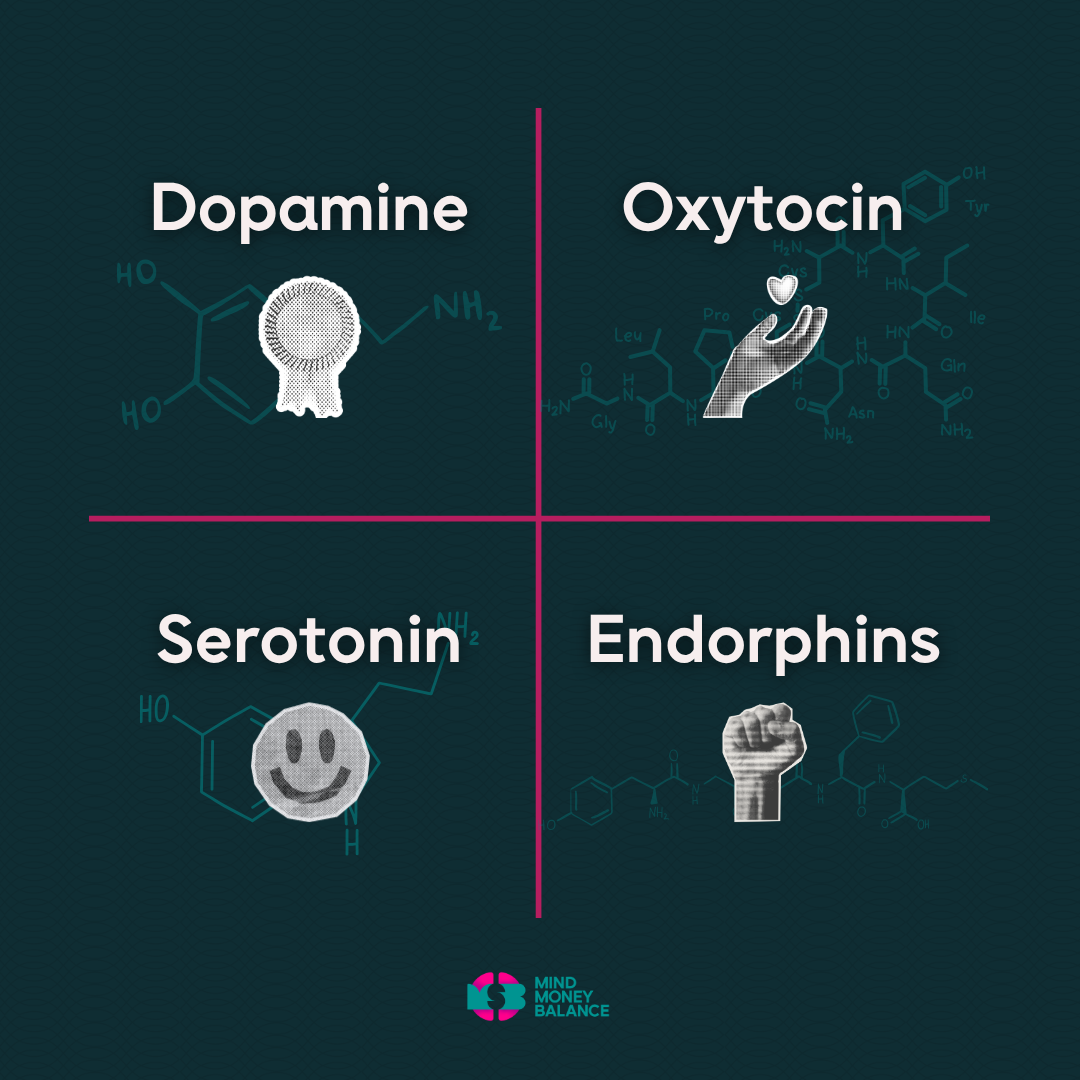
Our brains are wired to seek things that help us feel better, which is why so many of us turn to shopping when we want a mood boost. One framework I come back to often is DOSE, an acronym for four feel-good neurochemicals that influence our emotions and behavior:
Dopamine: anticipation and novelty
Oxytocin: connection and love
Serotonin: steady happiness
Endorphins: the reward of completing a hard task, pain reduction
Shopping has a way of activating all four of these neurochemicals. Browsing for something new can create anticipation (dopamine). Shopping with a friend, buying a gift that reminds you of a loved one, or wanting to fit in with a certain group can create feelings of connection (oxytocin). Buying the thing you've been thinking about can bring a sense of satisfaction (serotonin), and clicking “Place Order” can feel like a release after a stressful day (endorphins).
None of this means shopping is “bad.” It means your brain is responding exactly the way human brains are designed to respond.
Is retail therapy real?
Yes and no. Retail therapy often works exactly the way people describe it: it can help you feel better temporarily.
After shopping, I’ve heard some people describe feeling sad or guilty, coining the term “spending hangover.” To be clear, many of us have felt regret after a purchase that didn’t change our lives the way we were promised, but people whose go-to coping mechanism is shopping may experience more of the “spending hangover” than others.
The important distinction is that retail therapy usually treats a symptom rather than the root cause. If you're lonely, shopping might temporarily make you feel connected. If you're overwhelmed, it might offer brief relief. If you're bored, it can add novelty to an otherwise ordinary day.
The challenge is that whatever prompted you to shop is often still waiting for you after the package arrives.
Why one purchase turns into five: The Diderot Effect
Another reason shopping can snowball is called the Diderot Effect. The idea comes from philosopher Denis Diderot, who received a beautiful new robe. The robe made everything else in his home suddenly feel out of place. So one purchase led to another, and he bought new furniture and artwork.
Most of us have experienced some version of this. Mine was sourdough. I told myself I just needed a Dutch oven to get better oven spring on my bread. Then I realized I needed a kitchen scale so I could measure my ingredients more precisely. Then a bench scraper, etc. None of those purchases were inherently bad.But every new item gave me another little bouquet of those feel-good chemicals—new thing. Tiny DOSE hit. Repeat.
Once we're in that cycle of novelty and reward, it's easy for one purchase to justify the next. That pattern helps explain why some people say they feel like they can’t stop shopping.
How Consumerism Impacts Us
In the US, we’re told that shopping is an important way to contribute to the economy. But unless you are buying local, it’s essentially contributing to the same handful of megacorporations. I’m not being facetious: 10 companies own most of the food products in the US, and most categories follow the same monopoly-style model.
Consumerism also turns “things” into identities. Acquiring products and goods has become a cultural, social, and identity-forming activity, and it's reinforced through social media and family traditions. If you’ve ever tried to pull back on your shopping or spending, let’s say, telling loved ones you won’t participate in a gift exchange, and felt pushback from others, that’s consumerism at work.
It's also why “just stop shopping” isn't super helpful. We're inundated by algorithms that know what catches our attention, all the way to friends who tease you for having a 12-year-old water bottle.
Consumerism runs deep, and when you shift your relationship with it, it can feel like you’re breaking an unspoken and widely accepted rule. When we understand that we're swimming in consumerist messages every day, it becomes easier to extend grace toward ourselves.
What do you want to feel?
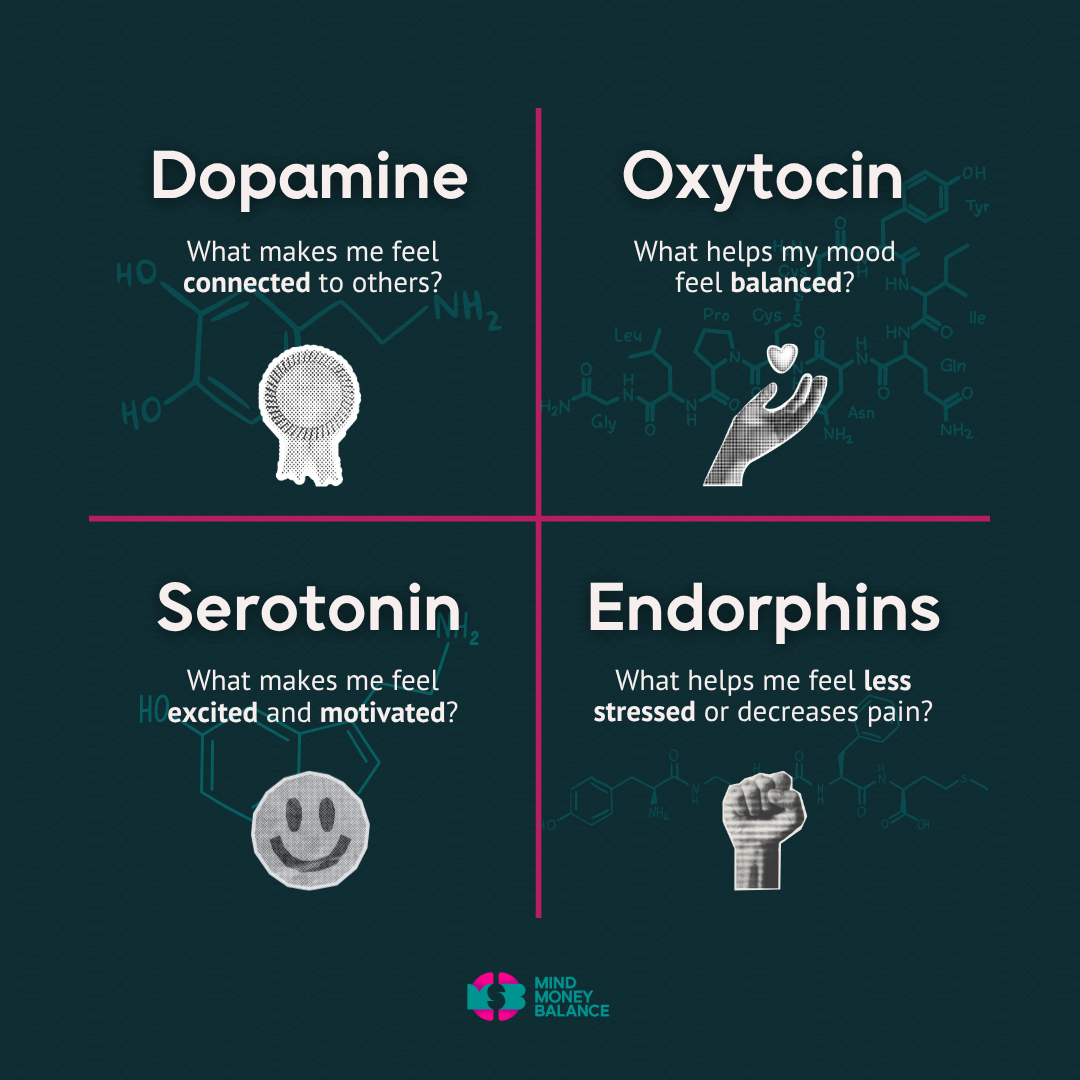
When it comes to dialing down the frequency of DOSE spending, notice when you’re most likely to shop and feel remorse. From there, look at what you may be trying to feel.
If you shop when…
You're lonely, maybe you're craving connection (oxytocin).
You’re exhausted from long days, maybe you're desperate for relief (endorphins).
Life feels repetitive or boring; maybe you're looking for novelty (dopamine).
You’re feeling a little down and are looking for a treat; you might be looking for happiness (serotonin)
If you’re feeling one of the things above, before you hit “add to cart,” ask yourself, “What am I hoping this purchase will help me feel?” That answer tells you what you’re looking to feel beyond the physical or literal purchase.
Other ways to get your DOSE
“Dopa-menus” were trendy on social media for a while. They were a list of things different people made that helped them get a hit of dopamine. You can do that with all the DOSE chemicals.
Need some ideas? Here are other ways to get your DOSE needs met:
Dopamine:
Find novelty and excitement.
Take a different route to work.
Walk a different neighborhood.
Borrow a book on a topic you've always been curious about from the library.
Start that TV show everyone keeps recommending.
Oxytocin:
Find ways to connect to others.
Text the friend you've been meaning to reach out to.
Schedule the potluck you've all been talking about.
Volunteer in your community for a cause you care about.
Spend fifteen minutes playing with your dog. Research suggests that petting animals can increase oxytocin levels, which might explain why so many of us feel better after spending time with them.
Serotonin:
Return to your physical needs, such as sleep, food, water, and movement.
Practice gratitude, like writing down 3 things you’re grateful for every morning.
Reinforce self-confidence; think of times you were proud of yourself or think about what you’re good at.
Endorphins:
Watch your favorite stand-up set on YouTube.
Dance to a few songs in your kitchen.
Sign up for a workout class or 5K
Shopping PLUS:
Find other coping tools
Shopping is part of life, and there’s nothing wrong with occasionally treating yourself to something to boost your mood. But if shopping is the only way you know how to celebrate success, cure boredom, or feel connected, it can become a problem, not just financially, but emotionally. That’s why it helps to have a broader range of ways to care for yourself.
The goal of learning more about DOSE spending isn’t to tell you to stop shopping and replace it with only free things. The goal is to get curious about what needs you may be trying to meet through shopping, and about other ways to meet those needs.
The next time you notice yourself reaching for your credit card, check in with yourself. Maybe you really are looking for a new pair of shoes. But maybe you really need connection, novelty, release, or a smile. Every time you pause to ask yourself what you're really looking for, you're practicing a skill that can change your relationship with money over time.