

What You Need to Know About Money Stories
Money stories are subconscious. These are beliefs you carry about money that start forming in childhood.
More than familial. Beyond your family, your neighborhood, school, culture, workplace, and community all shape the messages you absorb about money.
Money stories can change. Thanks to your brain's ability to learn and adapt, you can build a healthier, more flexible relationship with money.
What Are Money Stories?
Money stories are the beliefs, usually subconscious or unconscious, that shape how you think, feel, and behave around money.
Money stories help explain why two people with similar incomes can feel completely different about money. One person feels calm and spends and saves with ease. Another feels anxious and struggles to use their money in a way that enhances their life and aligns with their values.
It’s not because one of them is “good” with money and the other is “bad.” It’s because they are engaging with money based on their money story.
Money stories influence almost every financial decision you make, including:
Whether you carry debt (and whether you’re “allowed” to)
How comfortable you are earning money or advocating for a raise (or raising your rates for self-employed folks)
If investing feels "for people like me"
How easily you spend, and what you’re “allowed” to spend on
How easily you save, and what you’re “allowed” to save up for
Whether giving money brings joy or anxiety
Your money story developed over years of observing, listening, and making sense of the world around you.
There are six factors that impact our money story, and in this blog, I’ll dive into one of the most common factors: our interpersonal (often our families or caregivers) impact on our money story.
Think about some of the phrases you may have grown up hearing:
"Money doesn't grow on trees."
"It's impolite to talk about money."
"Rich people are greedy."
"You have to work hard for every penny."
Childhood and Money
Researchers at the University of Michigan found that children as young as five already show emotional reactions to spending and saving, years before they earn their own money or worry about taxes. By the time most of us are old enough to open a bank account, we've already absorbed thousands of messages about what money is, what it isn't, and how we’re supposed to use it. That's why I spend so much time talking about money stories.
Kids are constantly collecting information. Sometimes it's what we say explicitly, but oftentimes, it’s in the messages that we don’t say.
Imagine a child walking into the kitchen while two adults are discussing bills. The conversation abruptly stops. Someone says, "We'll talk about this later." The adults may simply be trying to protect the child. But kids are remarkable storytellers. Without additional context, that child might conclude:
Money is scary.
Money is secret.
Talking about money isn't safe.
My parents are worried.
This isn't about blaming parents, grandparents, or caregivers. Almost every money story is passed down with good intentions, but some of them come with unintended consequences.
Money Stories vs. Money Scripts
You may have heard the term money scripts before. While I appreciate the research that introduced the term “money scripts,” they aren’t my favorite way to view our relationship with money. Money Scripts were based on a narrow set of participants who were mostly white and were receiving financial planning services. In addition to being based on a pretty homogeneous group, they tend to be more shame-and-blame-based than the way I prefer to approach money.
Money stories are broader. Rather than labeling people or placing them into rigid categories, money stories invite us to ask:
Where did this belief come from?
How has it protected me?
Is it still helping me today?
What would I like to believe instead?
That last question matters because our brains are wonderfully adaptable.
Thanks to something called “neuroplasticity,” your brain can absorb new information and adapt. Because of neuroplasticity, we can learn new ways of thinking throughout our lives, including about money.
What Else Shapes Money Stories
Most personal finance conversations focus only on individual choices. But other factors shape our money stories. Of course, our parents or caregivers shape our money stories. According to Ecological Systems Theory, six factors affect how we move through the world. They are: individual, interpersonal, organizational, community, policy & laws, and society.

Teaching Kids About Money Without Passing Along Shame
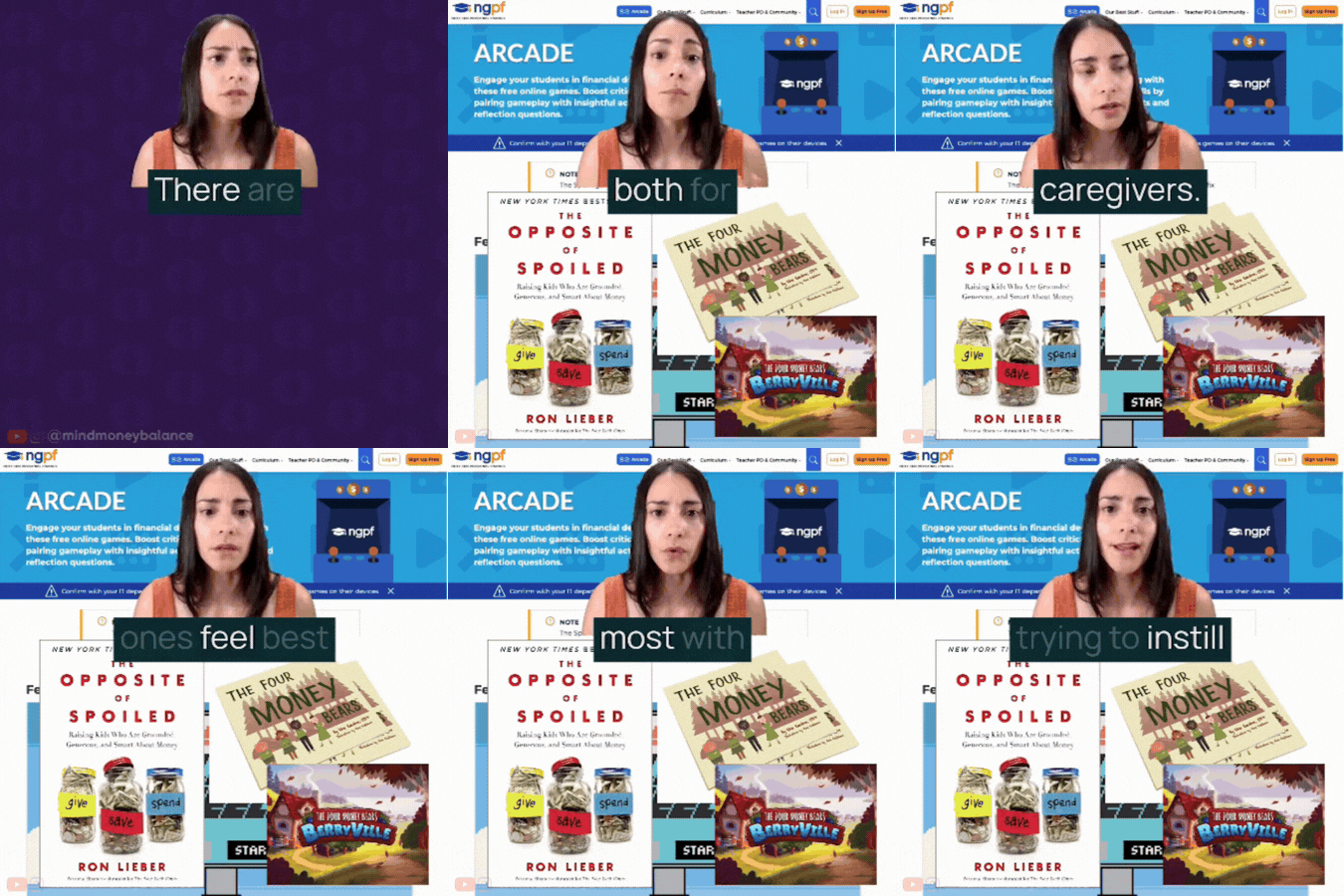
If you have children in your life you want to support in creating healthy money stories, I’ve got four tips that can help. The goal isn’t to be “perfect” with financial knowledge or emotional regulation. Instead, what matters most is creating flexibility, openness, and curiosity around money.
Here are four money lessons that can help build a healthier relationship with money.
1. Openness
Let kids join age-appropriate money conversations. If money conversations always happen behind closed doors, children often assume money is something scary or shameful.
Instead, invite them into age-appropriate conversations.
You might narrate your grocery shopping: "We're buying strawberries this week because they're on sale,” or "We're choosing this cereal because everyone in our family likes it."
Those small, repeated conversations help children see that money is simply one tool we use to make decisions, and that it isn’t something secretive and off-limits.
2. Inclusivity and Agency
Include kids in financial decisions to help them access money and start developing financial agency. Depending on the age of kids in your life, the financial decisions they’re allowed to make might be more tangible or more theoretical.
For young kids, one of my favorite ideas is using three jars:
Save
Spend
Give
It teaches children that money isn't just for saving or spending. It's also about generosity and community. And if you think the “give” jar is too early a concept, kids often have incredibly thoughtful ideas about who they'd like to help. That "give" jar reminds them that money can be a way to care for other people, too.
As kids get older, you can help them learn how to save up for toys or clothes that they want, and help them understand how things like paychecks and taxes work, too.
3. Abundance instead of Scarcity
A subtle language shift can make a big difference when helping kids understand financial abundance.
Instead of saying: "We can't afford that."
Try: "That's not a priority for us right now."
Those two phrases sound similar. But they teach very different money lessons. "We can't afford that" can reinforce a scarcity mindset. "That's not a priority" reminds children that spending is about making intentional choices.
Another way to help children understand abundance is to help them see that money isn’t something we’re supposed to hoard and grip tightly. Sometimes more money flows in, and sometimes more money flows out; helping children understand that money naturally flows in and out builds flexibility, not fear. That's a much healthier foundation than believing every dollar has to be protected at all costs. On top of that, money is abundant, but a small group of people hoards a lot of it.
4. Make and Talk About Mistakes
One of the biggest anxieties I hear adults name is that they don’t want to teach their children “the wrong thing” about money. However, one of the best things you can do is to normalize and validate financial mistakes. Instead of aiming for perfection, help them see how you build resilience and learn from a financial mistake. When they make a money mistake, like spending their allowance on a toy that breaks immediately, instead of blaming them for buying something junky, empathize with their decision and help them learn how to search for toys that are of better quality.
Can You Change Your Money Story?
Our money stories are not set in stone. People can absolutely edit their money stories. That doesn't mean you'll wake up tomorrow with a completely different relationship with money. It does mean you can begin noticing the stories running in the background.
When you catch yourself thinking:
"I'm just bad with money."
"I'll never be good at saving."
"People like me don't invest."
Pause and ask yourself: “Whose voice is that?” and “Is that story helping me or holding me back?”
This quick reflection question creates space between you and the story. Once you have that space, you get to decide whether you still want to keep it.
Moving Forward with an Updated Money Story
The beautiful thing is that stories can evolve. With curiosity, compassion, and a willingness to examine where your beliefs came from, you can begin writing a new story. This one can feel more aligned with your values and serve you better.
If you're curious about the strengths and challenges your own money story might reveal, take my Financial Archetype Quiz. It's a judgment-free way to understand your relationship with money better and start building one that feels more flexible, compassionate, and true to you.