

Your Nervous System & Money
What You Need to Know about your nervous system & money
The nervous system sends messages between the brain and body. Money stress can absolutely impact it.
Your financial archetype can offer insight into typical nervous system responses.
There are free and low-cost ways to regulate your nervous system to help you make wiser financial decisions.
Why Does Money Feel So … Intense?
TikTok says a cold plunge and hip stretching will heal your nervous system so you can manifest millions. Meanwhile, Reddit personal finance bros say separate your emotions from your money and follow their playbook to reach financial stability.
Both are wrong.
Tending to your nervous system won't magically make money appear in your checking account, and bingeing personal finance content won't make you feel better about money.
The answer is to blend nervous-system safety with financial tools. Understanding your nervous system and finding ways to feel safe can absolutely help you use the financial knowledge or tools available to you.
Before we get into what financial stress in your body looks like, a quick note: this blog is educational and isn't a substitute for mental or physical health care. If money stress is making it difficult to function day-to-day, consider calling 211 or visiting 211.org (available in the US and Canada) to connect with financial, mental health, and community resources in your area.
Nervous System Primer
At its simplest, your nervous system is the connection between your brain and your body. Its job is to keep you safe. Thousands of times a day, it's scanning your environment and asking one question:
Am I safe?
For most of human history, that meant watching for predators or other immediate dangers.
Thankfully, most of us aren't running from wild animals these days. When your nervous system senses a threat, it prepares your body to respond. Money can absolutely trigger this response.
A push notification from your bank can be mistaken for a threat. Your body doesn't stop to think, "This isn't a wild animal coming at me." It responds to the threat.
Once you understand that, a lot of financial behaviors start to make more sense.
Instead of asking, "Why am I like this?" ask, "What is my nervous system trying to protect me from?"
How Money Stress Shows Up In Your Body
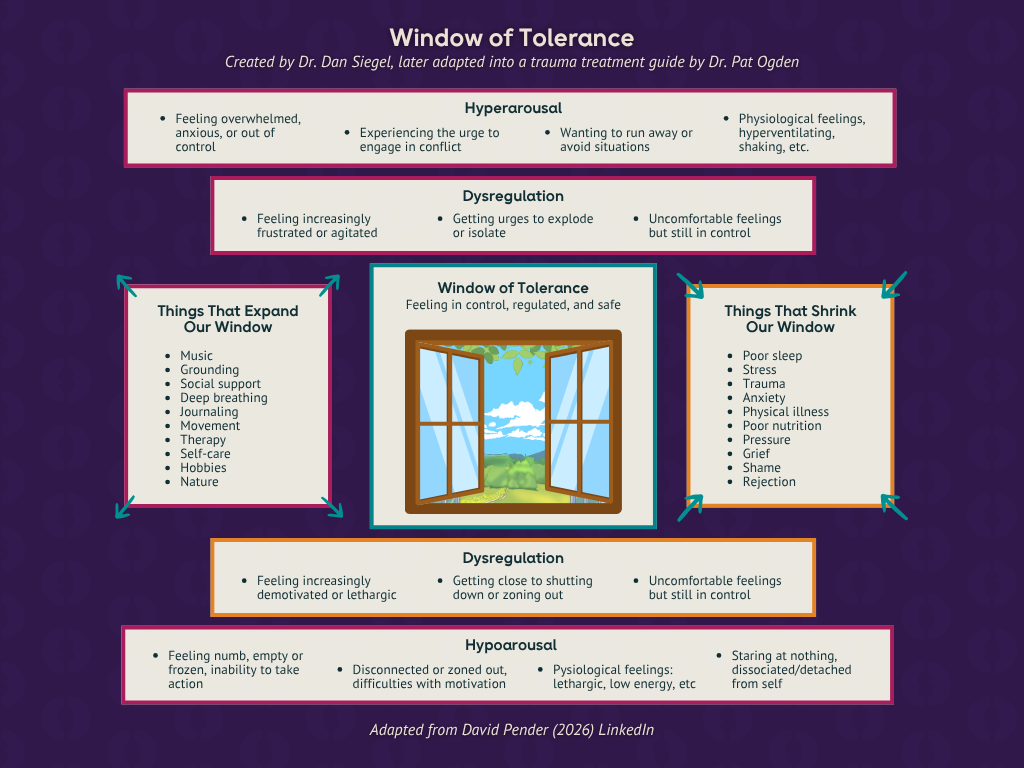
Very broadly, there are two directions a nervous system response can take when faced with a stressor: overstimulated or understimulated. These are sometimes called hyperarousal (or the sympathetic nervous system) and hypoarousal (or the dorsal vagal state).
When You're Overstimulated
This is the “high” end of your nervous system’s response, what many people think of when they hear "fight or flight."
Physically, your heart rate speeds up, your breathing rate increases, and your muscles tense. Common emotions include feeling anxious, on edge, or irritable, and feeling like everything is urgent and needs an immediate response.
The fight response might look like snapping at a partner about spending or feeling like you have to micromanage a budget. Flight could look like impulsively investing in something you don’t really understand or purchasing another “learn this financial secret” money course.
When You're Understimulated
The low end of the nervous system response looks different. Instead of gearing up to fight or run, your body starts conserving energy, so your breathing and heart rate slow. You might feel tired, numb, disconnected, or like it's impossible to motivate yourself.
This is where responses like "freeze," "submit," or "attach" often appear. Freeze can look like shutting down around money decisions: avoiding bank statements or experiencing decision paralysis. Submit or fawn looks like going along with others' financial decisions to avoid conflict. For example, overspending in social settings to avoid saying, “I can’t afford that.” Attach is seeking safety through connection, like over-relying on a partner for financial decisions.
Your Financial Archetype Adds Clarity
One reason I created the Financial Archetypes Quiz is that the nervous system is a part of the story. Knowing whether you tend to become overstimulated or understimulated around money can help you understand what's happening in your body and why your archetype shows up the way it does.
Your Financial Archetype can help explain the patterns you tend to repeat around money.
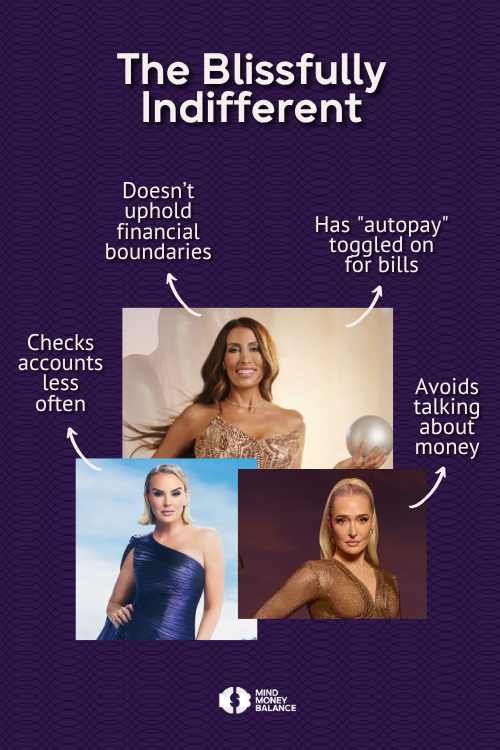
If you're a Blissfully Ignorant archetype, you might notice yourself shutting down around money, which can show up as freeze, submit, or attach.
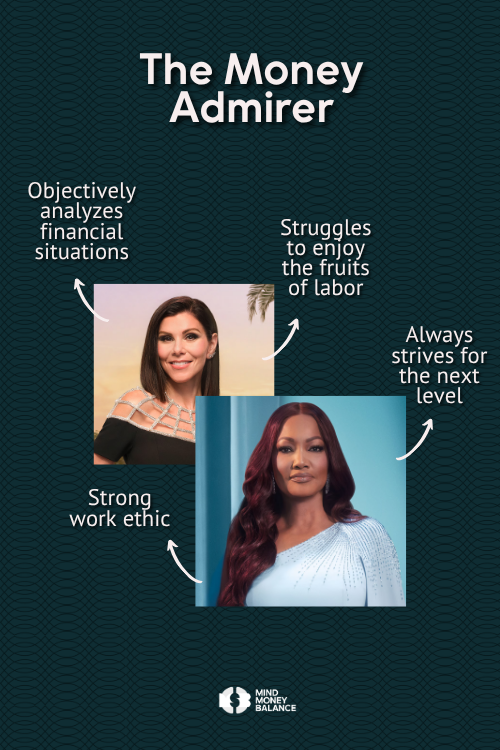
If you're an Admirer, the person always chasing the next financial goal, your nervous system might stay on high alert, scanning for the next opportunity.
A Free Spirit might swing between those two experiences, since they enjoy life and go with the flow. Sometimes buying last-minute tickets feels exciting and spontaneous. Other times, it feels easier to pretend that spending has no consequences, with your nervous system moving between high alert and shutdown.
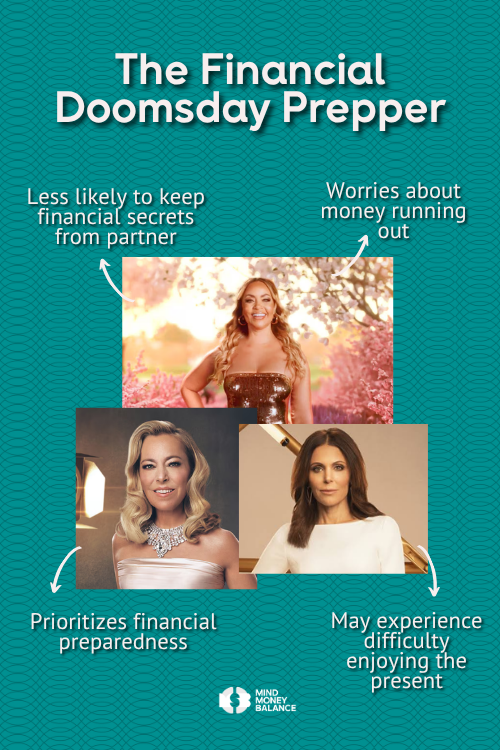
If you're a Doomsday Prepper, your nervous system might stay on high alert, constantly looking for signs that something bad is around the corner. Saving money can bring a sense of security, but it can often be at the expense of enjoying the life you've worked so hard to build.
Haven’t taken the quiz yet? Find your financial archetype here!
Of course, we're all more nuanced than a quick quiz can capture. But it can still help you understand yourself a little better.

Finding Your Window of Tolerance
Trauma therapist Pat Ogden describes something called the Window of Tolerance. This is when you are in the safe zone of your nervous system. It’s the range where you're alert enough to pay attention but grounded enough to think clearly.
Within your window of tolerance, you can solve problems, learn new information, tolerate discomfort, and make thoughtful decisions about both today and your future.
Pat Ogden uses the term "resourcing," while others use "regulating" or "coping." When you resource yourself, you can quiet the high-alert state or engage the low-alert state to enter this safe space in your nervous system. The important part is understanding the different ways that can help you feel better in your body so you can make wise, grounded decisions.
Ogden shares various ways to resource yourself so you can get into your nervous system sweet spot. They are:
Somatic: Body-based ways to care for yourself. Examples include taking a walk, stretching, or practicing deep breathing or meditation.
Material: Access to food, housing, clothing, and healthcare.
Relational: Connecting with others. Examples include friends, family, a therapist, and even pets.
Artistic: Things like drawing, journaling, creating, listening to music, looking at art.
Spiritual: Connecting to your higher power via church, temple, mosque, or with practices like prayer, tarot, astrology, or connecting to people and animals in a collective way.
Intellectual: Reading, podcasts, challenging your brain by learning something new, watching a documentary.
Nature: Being outside in nature. If that’s not accessible, research suggests our brains can still benefit from looking at images or videos of nature. Watching a documentary about forests, listening to ocean waves, or scrolling through photos from your favorite hiking trip.
Notice that they aren’t just somatic (sorry, TikTok nervous-system girlies) or material-and-intellectual (like the Reddit finance bros say). If you find your nervous system on the high or low end, consider tapping into one of the resources above to help regulate yourself.
Instead of making a financial decision when you’re overstimulated and impulsive, see if you can go for a walk around the block first to regulate your body. Or, if you know you have to file your taxes but your body is telling you to avoid it, try coloring for 15-20 minutes to help regulate yourself first.
Nervous System Support & Financial Literacy Go Together
Tending to your nervous system won't magically make money appear in your checking account. And memorizing every budgeting strategy on the internet won't automatically help you feel calmer about money: we need both.
Financial knowledge gives us the tools. Understanding our nervous system helps explain why those tools sometimes feel easy to use and other times feel completely out of reach. Together, they help us make wiser, more grounded money decisions.
When you notice yourself making an impulsive purchase, shutting down over a bill, or avoiding an important money conversation, resist the urge to label yourself as "bad with money."
Instead, get curious: “What might my body be trying to protect me from?”
From there, check in with yourself and ask what resources would help you feel more grounded, and what financial tool would be easier to use if you felt safer.
Interested in bringing information like this to your team, organization, or conference? Reach out to partner with Lindsay!