

What You Need to Know about Lindsay Bryan-Podvin:
Lindsay Bryan-Podvin is a licensed social worker, certified financial therapist, author, and founder of Mind Money Balance, helping people feel better about money without the shame
Her work blends mental health, social justice, and financial wellness, offering support for individuals, workplaces, and brands alike.

Why I’m Reintroducing Myself
Every time I think I’ve said everything there is to say about money, mental health, and systems, life proves me wrong. Recently, I was introducing myself to someone new at a conference when someone casually quipped, “Feelings are fine, but people just need to move out of their parents’ basement and open a savings account.”
Yikes.
My internal voice screamed, “Did you really just say that out loud?”
Sadly, comments like this aren’t the first I’ve heard, and they won’t be the last. Comments like that are why I still do this work. Because money is never just about math (or savings, or basement-living), it’s about emotions, history, mental health, and the systems we navigate every day.
So if you're wondering who I am, what I actually do, and how financial therapy fits into the picture, consider this your official re-introduction.
Who I Am, Professionally and Personally
I’m Lindsay Bryan-Podvin. I’m a financial therapist, social worker, author, and the founder of Mind Money Balance. I have a master’s in social work and hold certifications in both financial therapy and financial social work. I’m also the author of The Financial Anxiety Solution, an interactive workbook designed to help people reduce money stress through emotional insight and behavior change. I absolutely love talking about the intersection of money and mental health, and have been interviewed by major media outlets about everything from my take on regifting (I’m all for it!) to micro-finance trends, like “loud budgeting” and “de-influencing.”
Outside of my professional life, I’m a Virgo, a dog mom, and popcorn enthusiast. My downtime looks like baking sourdough, watching Below Deck, and taking my Portuguese Water Dog on long walks. (Because yes, you can care deeply about money and mental health and have lots of opinions on which Housewives franchise is the best).
What Does a Financial Therapist Do?
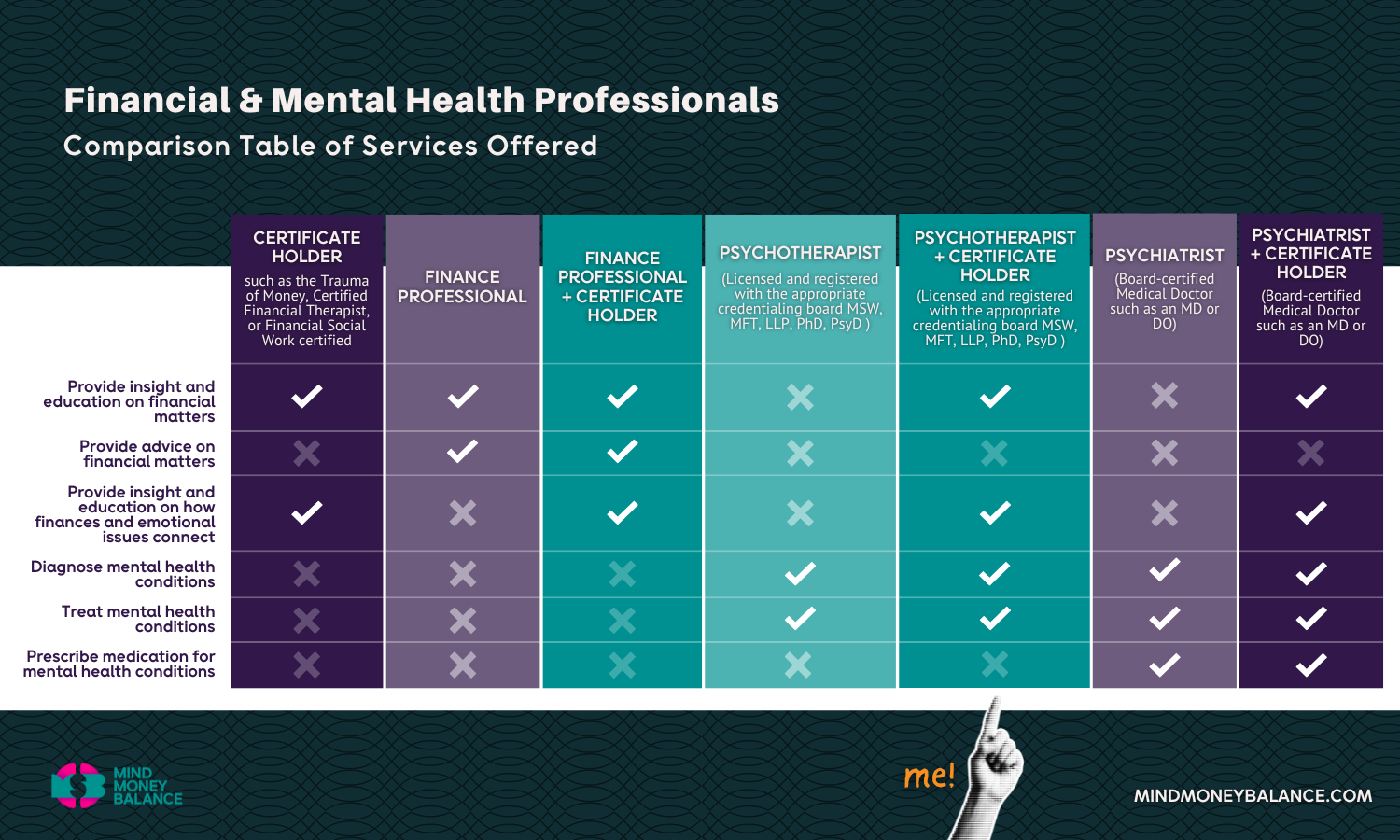
At its core, financial therapy helps people understand their relationship with money, without shame or judgment, so they can make better financial decisions. Money is emotional. And what we do, or don’t do, with our money is impacted by the way we think, feel, and the systems we live in.
As a financial therapist, I help people unpack their feelings about money like stress, guilt, anxiety, excitement, joy, and move toward a relationship that feels more aligned with their values. When a financial relationship is aligned with a unique individual’s values, they are more likely to achieve their financial goals without shame or stress.
Some examples of ways clients and workshop participants set financial goals using the tenets of financial therapy:
Spending joyfully (yes, you’re allowed to want things, I have a fun money account and have used it for everything from baking supplies to a new tattoo!)
Setting financial boundaries that feel good
Practicing releasing financial survivor’s guilt
Some days, I’m working one-on-one with therapy clients (virtually, and only in Michigan due to my licensure). Other days, I’m partnering with workplaces or brands to bring financial well-being programs to larger audiences.
Workplace Financial Wellness
Financial wellness isn’t just a personal issue; it impacts the workplace too. When people are stressed about money, it impacts their physical, mental, and social health and is associated with absenteeism and lower productivity. According to a 2024 workplace wellness survey by BrightPlan, 39% of workers report experiencing financial stress, and these employees lose over seven hours of productivity each week due to it.
When my waitlist for one-on-one financial therapy work tipped 300 people, I knew there had to be a better way to reach more people. Because of the importance of financial well-being at work, I’ve led sessions for companies like Intuit and McCain Foods, and facilitated budgeting workshops that reframe restrictive budgets into a more sustainable and joyful spending plan.
Through The Mind Money Balance Method, I’m expanding this work further by offering curriculum-based financial well-being programming to organizations and communities around the country. Learn more about the Mind Money Balance Method here.
Why I Became a Financial Therapist
I became a social worker in 2012, but it wasn’t until 2018 that I formally trained in financial therapy. By 2020, I launched Mind Money Balance as my full-time financial wellness business.
Contrary to what my Virgo heart would’ve wanted, a financial therapist wasn’t some tidy career goal I had mapped out.
It started when I realized that my training in therapy prepared me to talk about sex, trauma, relationships, but not money. And yet, money came up all the time.
In my first post-grad job as a social worker, I made less than I had as a server. I was living paycheck-to-paycheck, despite coming out of school with no student debt. And I felt deeply ashamed, like I’d squandered my financial privilege. In addition to the emotional experience of financial shame, my health and mental health suffered, too. I started experiencing insomnia and an increase in previously well-managed anxiety and depression symptoms. I felt like my immune system was in revolt, constantly fighting off colds.
I turned to personal finance books (this was before the explosion of FinFluencers and podcasts). Instead of relief, I found blame: Stop going to brunch! You’re wasting money on shoes! Cut all forms of entertainment! You should suffer and punish yourself more!
These (very red-faced and angry) financial experts ignored the systems we live in. Skirted issues of how mental health might impact one’s relationship to money. And couldn’t even fathom.
So in true Virgo-with-ADHD fashion, I hyperfocused. I read everything, and when the opportunity arose to get a certification in Financial Therapy, I did. In 2018, I became Michigan’s first financial therapist.
Where I Work and Who I Serve
Because of licensing laws, I only provide 1:1 financial therapy services to folks living in Michigan. But my speaking engagements, brand collaborations, and workplace financial wellness programs are available nationally.
Most employees want more than a paycheck; they want their employer to care about their overall well-being. That’s why I partner with HR teams and organizations to create emotionally informed, practical financial programs for their people.
Whether it’s a one-off workshop or a longer partnership through the Mind Money Balance Method, my goal is always the same: help people feel less ashamed and more confident with their money.
How To Connect With Me
You’ve already found my website (yay!), and the best way to stay in touch with me is by joining my weekly Mind Money Balance newsletter. In these newsletters, I share a story about money and emotional well-being, always with an actionable takeaway or opportunity for you to trust yourself to try something new.
If you want to work with me more directly, consider hiring me for financial therapy-informed wellness. I work with brands, conferences, and workplaces, tailoring financial wellness content to each audience’s needs.